

Operation Jairo Mora
Saving turtles to keep alive the legacy of an environmentalist murdered in Costa Rica

The Spanish News paper El País (Spain) interviewed Victor Boza of the Captain Paul Watson Costa Rica for an in depth feature about the Jairo Mora Campaign. This is the English Translation.
(Jairo Mora Sandoval was murdered on a Caribbean beach in Costa Rica on May 31, 2013. The Costa Rican government initially did very little to solve the crime. I put up a $30 Thousand U.S. dollar reward for the killers. The President of Costa Rican Was furious and ordered the Costa Rican media to censor me. Fortunately they did not and four men were arrested, convicted and sentenced to 25 years in prison.)
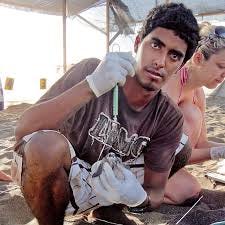
Jairo Mora (2013)
Saving turtles to keep alive the legacy of an environmentalist murdered in Costa Rica
A group of volunteers from Paul Watson’s foundation protects the nests of endangered species in remembrance of Jairo Mora, a Costa Rican activist executed 12 years ago.
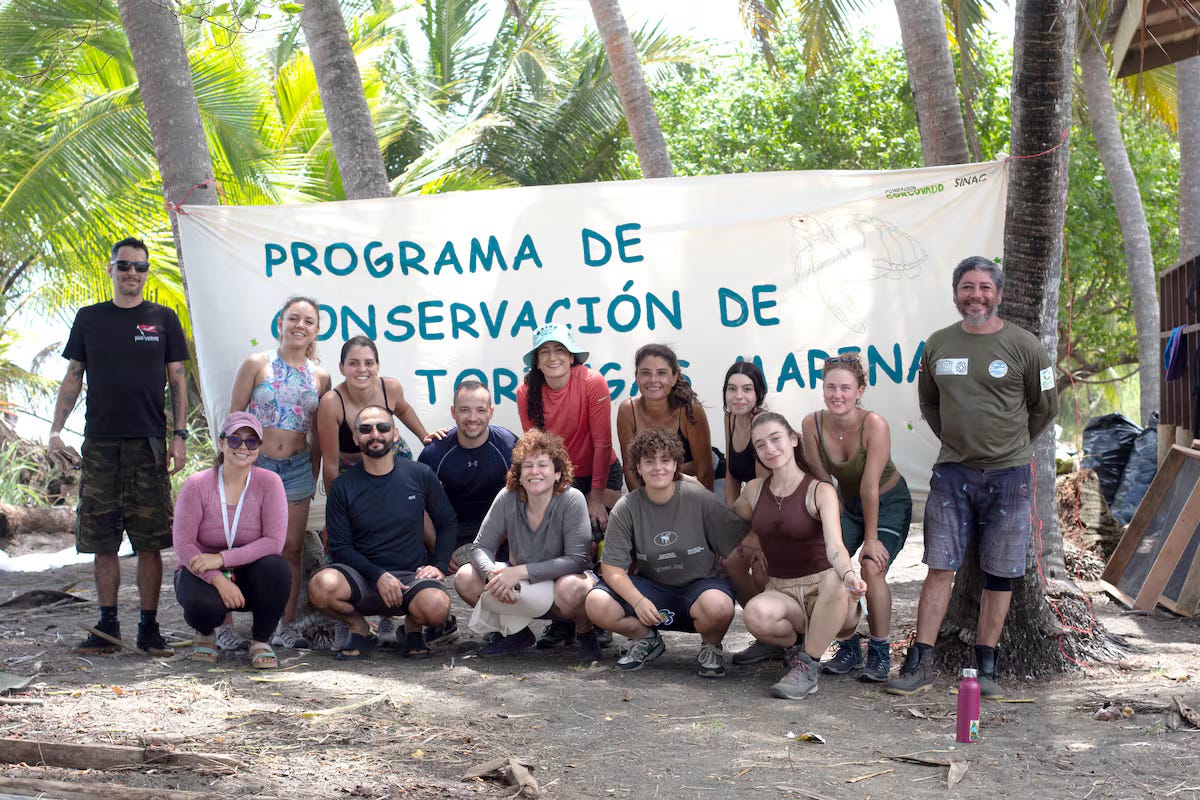
On Palo Seco beach, just as dawn breaks in this area of the Parrita canton, about twenty volunteers from the Captain Paul Watson Foundation (CPWF) move back and forth carrying bags of sand and logs. As they have done every Saturday for the past two months, they are working to build a hatchery for the eggs of the Kemp’s ridley sea turtle ( Lepidochelys kempii ), an endangered species whose nesting season begins in June.
“We’re filling sandbags to create a barrier so the waves don’t destroy the hatchery,” explains one of the volunteers. Once the nesting season begins, the plan is to move the eggs to the hatchery to prevent poachers from stealing them. In Costa Rica, the illegal trade in turtle eggs is devastating nests on both the Caribbean and Pacific coasts, and it’s one of the reasons why the National System of Conservation Areas (SINAC) estimates that only 10% of the eggs laid successfully complete their life cycle until the hatchlings reach the ocean.
This project is named after Jairo Mora, an activist dedicated to turtle conservation, who was murdered in 2013. In the early morning of May 31 of that year, police found his body gagged on Moín Beach, on the Costa Rican Caribbean coast. The environmentalist—who was 26 years old and had dedicated much of his life to this work—was attacked by a group of men while on patrol with four foreign volunteers. The attackers raped the women, but they managed to escape and contact the authorities. According to the autopsy, Mora died of asphyxiation after being struck on the head.
Although the men were captured and sentenced to 35 years in prison, this case remains an open wound in Costa Rica. Shortly after the activist’s death, the organization he belonged to stopped its patrols. Because of this, the CPWF, through the Jairo Mora Project, has been working for the past year to continue the fight against egg poaching and keep the environmentalist’s legacy alive.
When the nesting season begins, the volunteers will start the next phase: nighttime monitoring to locate the turtles that are laying eggs, move the eggs, and care for them. To prevent poachers—or “egg thieves,” as they are colloquially known—from stealing from the hatchery, they will also have to implement round-the-clock surveillance.
The sale of turtle eggs in Costa Rica is illegal, with the sole exception of olive ridley sea turtle eggs from mass nesting events at the Ostional National Wildlife Refuge on the Nicoya Peninsula (North Pacific); this trade is strictly regulated. These eggs are considered an exotic delicacy and an aphrodisiac, which gives them value in the illicit market.
Activists acknowledge that these processes affect the natural hatching cycle of turtles, but they accept it as a lesser evil given how widespread egg theft and trafficking is in Costa Rica.
Direct action
The CPWF, an international organization founded by the controversial environmentalist Paul Watson , was established in Costa Rica in 2024. The coordinator and spokesperson for the local branch, Víctor Boza, has been working with Watson for over a decade, first with Sea Shepherd Conservation Society, his previous NGO, and now with this new entity.
In 2014, Boza also participated in an initial initiative honoring Mora. “Foreigners came and went to patrol Moín in a violent manner in an area where there are egg thieves and poachers linked to organized crime,” he recounts.
The activist believes that this was part of a euphoria and greenwashing that occurred after Mora’s death, but that it didn’t last long: “Working with the law of the strongest doesn’t work. That’s why Watson and I decided to focus on education, direct action, and communities.”
The CPWF officially began its work in Costa Rica in early 2025. Initially, they coordinated river and beach clean-up days. “We had to start recruiting volunteers completely from scratch,” explains Boza, clarifying that the funds they use come from direct donations to the CPWF and that all the work in Costa Rica is done by volunteers.
Together with Carolina Torres, his partner and “right-hand woman” at CPWF, Boza says they tried to “offer a new approach that wasn’t just about collecting trash.” Operation Jairo Mora is part of the direct action aspect, as is the work of the Aguas Vivas project, dedicated to collecting plastic fishing nets, which they carry out in collaboration with volunteers trained in diving.
In the educational field, they developed a project aimed at children that has engaged 2,500 children in six months. “The goal is for them to learn about the sea and understand the oceans from a different perspective. With virtual reality systems, the children learn by playing and observing animals, which is fundamental given that Costa Rica’s maritime territory is 11 times larger than its land territory,” Boza points out.
Although the CPWF has collaborated with local governments and conducted educational workshops in state museums, Boza believes Costa Rica is a contradictory country when it comes to environmental issues and questions the role of SINAC. “There are many very good people working at SINAC whom I respect completely, but more commitment to turtle conservation is needed,” she says.
With the third aspect of the program in Costa Rica, community engagement, the CPWF wants to shift its focus and encourage “those who are causing the problems to start changing the community,” says the coordinator. “Our goal is for Parrita and every community we work in to be sustainable over time. That’s why we don’t want to arrive as outsiders on the coast and start fighting with the locals who sell eggs. We want to begin a learning process and involve the people who steal out of necessity, because they could be incredible guides.”
The activist says that many of the egg collectors are locals and “have been seeing turtles since they were six years old,” so they know “what day they come out, where they come out, how they come out, and what time they come out.” “If we can take them on, pay them for work as guides, and have them work instead of selling their eggs in bars and restaurants, we will be providing a service to the community.”
He also points out that these illegal activities are often linked to the extreme poverty prevalent along the country’s coasts, which fuels organized crime. “Many people collect the eggs because it’s a source of income for their families. They sell each nest for about 10,000 colones (around $20) to restaurants,” he explains.
Boza, however, acknowledges that this goal will be more long-term: “We want to empower people in the communities. What do we need? Money to pay them. How are we going to do it? We don’t know yet.”
Margarita, one of the volunteers in Parrita, also says it’s important to always consider the social aspect. “It’s not about good guys and bad guys, because many of those who steal eggs are people from low socioeconomic backgrounds in areas with few job opportunities. It might even be the only food they put on their tables.”
The goal of these programs is not to “make money,” says Boza, and the Jairo Mora issue is especially sensitive in that respect, since, he adds, other NGOs have used his name and image to exploit them commercially.
For Margarita, the fact that the initiative bears this name is fundamental because in Latin America “it is a fact that being an environmentalist is one of the most dangerous things there is, and in most cases there is no justice. Jairo himself said that he would die for the turtles if necessary, and sadly that’s what ended up happening.”
https://elpais.com/america-futura/2026-05-09/salvar-tortugas-para-mantener-vivo-el-legado-de-un-ambientalista-asesinado-en-costa-rica.html?brid=YWdncwGybcY3yAz2GfgdYgdaECSJ#0uuxzvydbdtw26l2otdd486x3u6nj85t
I love this!!! and one of the reasons I am a regular supporter of CPWF. Such a beautiful way to honour this man who gave his life for these ancient creatures. It is hard to comprehend that people can show such disregard for people and animals, when you do not live in poverty. Paying people to do the right thing instead of getting money by doing the wrong thing - is the key to real change.