

BIOCENTRISM
WHAT WE ARE

What We Are
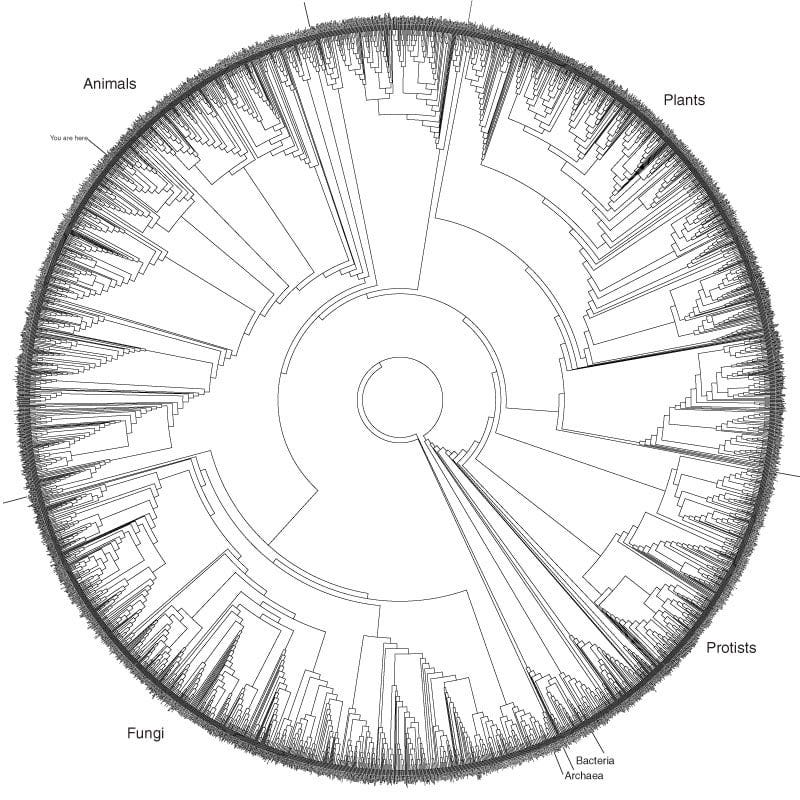
When we look at the big picture and the millions of species on our planet we can see that we are not special. We are not at the center of this wheel of life.
We exist because of this wheel, not apart from it. We are, along with all other species a collective that supports and sustains all other members of this wondrous living planet.
Some 14 billion years ago, the Universe as we know came into existence and some 200 billion trillion stars formed hundreds of billions of galaxies and thousands of millions of planets.
Some tens of thousands of years ago a bunch of hominid primates on a small rock orbiting a mediocre average star managed to survive and some 10,000 years ago, their ancestors decided that we must be the reason this all came into being. Created just for us because we decided we were special, in fact we were seduced by the delusional idea that we were and are the only species that matters.
That delusion is called Anthropocentrism.
All major world religions are Anthropocentric.
The reality is however that we are connected and interdependent with other species some of which are far more important than we are for the simple reason that we cannot live without many other species but most other species can live very well without us.
Because of phytoplankton and the rainforests, we have oxygen to breathe. Because of worms and microbes we have soil that produces the food we eat. Because of bees and many other insects, plants are pollinated and because plants can literally eat sunshine we don’t starve.
We need a new perspective - Biocentrism.
Your thoughts are welcome.
Image by David M. Hillis, Derrick Zwickl, and Robin Gutell
If we want even a shot at undoing 10,000 years of anthropocentrism, we must change the story civilization tells itself.
Most of our dominant narratives today, whether modernism, neoliberalism, techno-solutionism, or even the most generous forms of humanism, still place our single bipedal species at the center and on top of everything, for no defensible reason, no matter the circumstances. At best, they ask how nature can be preserved, but almost always for our own benefit. If we better understood how interdependence works in the biosphere, perhaps, as Captain Nemo once said, “men [...] may at last be free.”
As a designer, I often think of one of your older essays, from around 2007 if I remember correctly, where you described a biocentric civilization in which most of the land would be returned to other species. Instead of creating narrow corridors for animals through human-dominated territories, we would create modest human corridors through wild nature, connecting small settlements with deliberately limited footprints. Global logistics would be handled by sailboats and airships, and life would be arranged around the integrity of ecosystems rather than the expansion of cities.
Today we might call such a vision “solarpunk,” though I am not sure the label existed when you wrote it. In any case, that image has stayed with me for years.
So yes, some of us must attempt to change the story. But I also believe some of us need to design and prototype that story into reality. As Buckminster Fuller put it, “You never change things by fighting the existing reality. To change something, build a new model that makes the existing model obsolete.”
I see biocentrism as the design brief civilization has been avoiding so far.
Yes I don;t know what it will take to shift this perception. But it needs to happen - and fast